Blood Sugar Supplements Benefits: Where Expectations Go Wrong
Most disappointment in this category is manufactured before the bottle is opened. Not by lies exactly — by a gap between what a sales page implies, what the law permits it to say, and what the human research will actually carry.
Quick answer: what can this category honestly deliver?
The realistic blood sugar supplements benefits are modest, slow and additive at best — some ingredients may help support glucose metabolism already within a normal range when they sit on top of decent food, movement, sleep and weight management. No supplement diagnoses, treats, cures or prevents diabetes, none replaces prescribed medication, and for several of the most heavily marketed ingredients the human evidence is thin or openly contradictory.
- Scale: think of the whole category as a small contribution to a plan, never as the plan.
- Speed: nothing here works acutely. Twelve weeks is a fair test; two weeks is an opinion.
- Ceiling: a supplement cannot out-perform the sleep debt, the alcohol pattern or the waistline it is competing with.
There is a specific way this category disappoints people, and it is worth naming because it repeats: the buyer forms an expectation from tone rather than from text. The text on the box is legally careful. The tone around it — the before-and-after framing, the urgency, the words "breakthrough" and "finally" — is doing entirely different work. When the product then behaves like a supplement, the buyer concludes it was a scam. Often it was not a scam. It was a modest ingredient wearing a costume.
The ladder between what is said and what is implied
Dietary supplements in the United States are allowed to make structure or function claims: statements about supporting a normal body process. They are not allowed to make disease claims. That is why every label in the category says something like "supports healthy glucose metabolism" and never says the thing the buyer heard.
The gap between those two sentences is where the money is made. A page can surround a compliant claim with imagery, adjacency and implication until the reader arrives at a disease claim on their own, and technically nothing false has been printed. Learning to read for the actual claim — the words inside the quotation marks, not the impression around them — deflates most of this category on contact.
If you cannot find a sentence on the page that says the product does the thing you are hoping for, that is not an oversight. It is the only part of the page written by someone who read the rules.
The mandatory disclaimer is the tell. Any product carrying a structure or function claim must state that the claim has not been evaluated by the Food and Drug Administration and that the product is not intended to diagnose, treat, cure or prevent any disease. It appears in small type at the bottom because it is the truest sentence on the page.
Five expectations that break, and what to replace them with
"It will bring my numbers down." Replace with: it may support metabolism already in a normal range, and any change worth noticing will be small, slow and easily swamped by a bad fortnight of sleep. Nothing in this aisle is a substitute for treatment of a diagnosed condition.
"I will feel it." Replace with: glucose regulation is not a sensation. Whatever you feel in week one is far more likely to be expectation, a change you made alongside the purchase, or the ordinary variation of being a person. This is precisely why blinded trials exist.
"Natural means gentle." Replace with: botanically derived compounds are pharmacologically active or they are inert; there is no third option. Ingredients with real glucose activity also have real interaction profiles, and the most active ones in this category are the ones a pharmacist most wants to know about.
"Clinically studied means studied as sold." Replace with: it usually means one isolated ingredient was studied at a dose that may bear no relationship to what is in the bottle. Studying an ingredient is not studying a product.
"More ingredients means more coverage." Replace with: long ingredient lists in a fixed-size capsule mean small amounts of each. A formula naming fourteen botanicals is usually a formula with fourteen tiny amounts, and the proprietary blend exists to stop you checking.
Blood sugar supplements benefits, ingredient by ingredient
The table below is qualitative on purpose. Precise effect sizes vary between analyses, populations and preparations, and quoting a single figure would misrepresent a literature that genuinely disagrees with itself.
| Ingredient | Typical form sold | Human evidence strength | The honest caveat |
|---|---|---|---|
| Soluble fibre (psyllium, beta-glucan) | Powder, dosed in grams | Most consistent in the category, with a mechanism that is physical rather than speculative | Needs gram-scale amounts and water; capsule-sized doses are largely decorative |
| Berberine | Capsule, gram-scale daily | Among the more promising, and correspondingly the most drug-like | Substantial interaction potential with common prescriptions; not a casual add-on |
| Magnesium | Various salts | Clearest where an intake shortfall exists in the first place | Correcting a deficiency is not the same as an effect in someone already replete |
| Chromium | Picolinate, capsule | Mixed and much weaker than its marketing footprint suggests | Analyses disagree; deficiency is uncommon on ordinary diets |
| Cinnamon extract | Capsule or powder | Inconsistent; results vary by preparation and population | Cassia varieties carry coumarin, which is a genuine reason to check the species on the label |
| Panax ginseng | Standardised extract | Long-studied, heterogeneous, with signals that do not replicate cleanly | Documented influence on blood glucose and documented interaction with diabetes medication and anticoagulants |
| Alpha-lipoic acid | Capsule | Studied mainly for nerve-related symptoms rather than for glucose control itself | Frequently marketed for the wrong endpoint entirely |
Read that table twice and a pattern appears. The ingredients with the strongest evidence are the least glamorous and require the largest doses, while the ones with the flashiest marketing sit in the weak-and-inconsistent band. That is not a coincidence — a compound with an unambiguous, easily demonstrated effect tends to end up regulated as a medicine rather than sold as the most effective blood sugar supplement anybody has heard of.
Wrong shelf? That happens more often than you would think
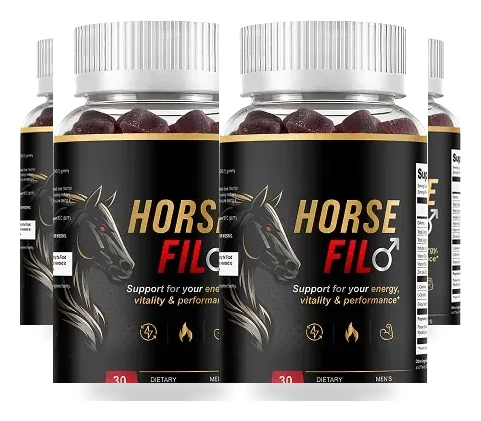
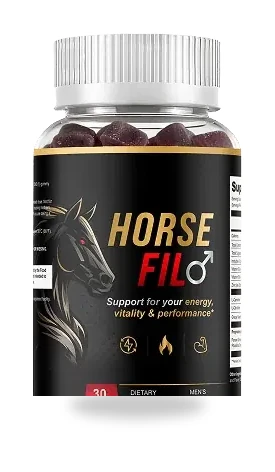
Many men reach the best natural blood sugar supplement pages by way of an energy complaint rather than a laboratory result. HorseFil is the men's energy and vitality formula this site covers — not a glucose product, and we are not going to pretend it is one. If that is the shelf you actually meant, the official store publishes current prices and its own guarantee terms.
See It at the Official StoreAd · independent affiliate page · confirm every price and term on the store's own checkout
The two words that do the most damage: natural and proprietary
"Natural" is not a regulated quality claim in this context, and it certainly is not a safety claim. Botanicals are chemistry that happened outdoors. The ingredients in this category with the most convincing activity are, predictably, the ones with the longest interaction lists, and the ones that a person on metformin, a sulfonylurea, insulin or an anticoagulant most needs to raise with a pharmacist before adding.
"Proprietary blend" is worse, because it is a legal mechanism rather than a marketing word. It permits a manufacturer to disclose one combined weight for a group of ingredients. The consequence: the expensive standardised extract can be a trace, the cheap filler can be nearly all of it, and the label is entirely compliant. If a formula hides its actives inside a blend, the evidence discussion above cannot even begin, because you do not know what you are evaluating.
What a realistic best case actually looks like
Here is an honest sketch of a good outcome, which no sales page will write for you.
You choose a product whose label you can fully audit. You take it consistently for twelve weeks alongside changes that carry real weight — a walk after your largest meal, an earlier bedtime, less alcohol, a slightly smaller waist. At the end you repeat a laboratory test and the number has moved slightly in the direction you wanted. Attribution is genuinely ambiguous, because you changed four things and only one of them came in a bottle. That ambiguity is not a failure of the experiment; it is the honest result of one.
The alternative version, in which a supplement produces an unmistakable change on its own while nothing else changes, is not the typical outcome for this category and no responsible page should imply it is. Framed that way, the blood sugar supplements benefits worth paying for are the ones that survive being measured properly rather than the ones that survive being felt. If you want to reduce that ambiguity, the method matters more than the product — we set out a workable version in the numbers worth tracking on a glucose-support trial.

What this category cannot do — stated without hedging
It cannot diagnose, treat, cure or prevent diabetes, prediabetes, or any other disease. It cannot replace prescribed medication, and stopping or reducing a prescription because a supplement arrived is a genuinely dangerous idea that belongs nowhere near this decision. It cannot correct an eating pattern, a sleep debt or a body composition problem, and it cannot outrun any of them.
It also cannot tell you what your numbers mean. Interpretation of a glucose result belongs to a clinician who knows your history, your medication and your family background. A supplement page — including this one — is not qualified to do that and should not be asked to.
And it cannot be judged from the outside. When people ask what is the best blood sugar supplement on the market, the truthful answer is that no ranking exists which is based on head-to-head human data, because those trials have largely not been run. What exists is a ranking of marketing budgets.
Where the product this site covers sits
HorseFil is a men's energy and vitality formula, not a glucose product, and it makes no glucose claim. Its relevance here is specific and worth knowing: it contains panax ginseng, an ingredient with documented influence on blood glucose and documented interactions with diabetes medication and anticoagulants such as warfarin.
That is the practical crossover for anyone reading this page. Men who are shopping glucose support are frequently also taking a men's formula, and the ingredient overlap is invisible unless somebody adds the labels together. A pharmacist will do that in ten minutes for free.
We apply the same scepticism to the product we cover as to everything above. Its sales page publishes no per-ingredient amounts and no standardisation figures, which means the evidence assessment in this article cannot be completed for it from the website alone — only from the physical Supplement Facts panel. We would rather print that sentence than fill the gap with a number we made up, and the price you pay should never buy you less information than that.
Check the Official Store Read the adaptogen breakdown
Frequently asked questions
What are the realistic blood sugar supplements benefits?
Modest, slow and additive. Some ingredients may help support glucose metabolism already within a normal range when they sit on top of decent food, movement, sleep and weight management. No dietary supplement diagnoses, treats, cures or prevents diabetes or any other disease, and none replaces prescribed medication.
Should I feel something in the first week?
No, and expecting to is the most common source of disappointment in this category. Glucose regulation is not a sensation. Anything noticed in week one is far more likely to be expectation, or an unrelated change made at the same time, than a physiological effect of the product.
Does natural mean safe here?
No. Botanical ingredients are either pharmacologically active or inert, and the ones with genuine activity on glucose also carry genuine interaction profiles. Anyone taking diabetes medication or an anticoagulant should take the full label to a pharmacist before adding anything to it.
Why do sales pages avoid saying a product lowers blood sugar?
Because dietary supplements may only make structure or function claims about supporting a normal body process, not disease claims. The careful wording is deliberate, and the impression built around it is doing work that the label itself is not permitted to do.
Where to check this yourself
- NCCIH — what the science says about supplements and blood glucose
- NIH Office of Dietary Supplements — chromium, health professional fact sheet
- Mayo Clinic — what to know about supplements marketed for blood sugar
- Harvard T.H. Chan School of Public Health — dietary fibre and glucose response
- PubMed — pooled analyses of cinnamon and chromium for glycaemic outcomes
These are standing reference resources rather than citations of individual trials. We point you at the bodies that maintain the evidence summaries so you can check the current position yourself, rather than at a snapshot that ages.