Dose-Matching the Best Testosterone Booster You Can Buy
Almost every buyer compares brands against each other. Almost nobody compares the label against the studies the label is quietly borrowing from — which is the only comparison that separates a formula from a flavour.
Quick answer: how do you dose-match a testosterone booster?
Open the Supplement Facts panel, note the serving size, and compare the per-serving amount of each active ingredient against the amount used in published human trials of that same ingredient in that same form. If the bottle lists less than the studied amount, buries the figure inside a proprietary blend, or names no standardisation marker for a botanical extract, then the research the marketing is leaning on does not transfer to that product. This single check eliminates more shelf contenders than any other test a buyer can run at home.
- Match the form, not just the name. A root powder and a standardised extract of the same plant are not interchangeable, and the trials almost always used the extract.
- A blend total is not a dose. One combined weight covering five ingredients tells you nothing about any of them.
- Serving size is the multiplier. An impressive panel that requires four capsules twice daily is a different product from the one you thought you were buying.
The men's supplement aisle has an unusual relationship with evidence. Ingredients are chosen because studies exist, the studies are gestured at on the sales page, and then the amount that made those studies work quietly fails to make it into the capsule. Nothing about that is illegal. It is simply the difference between a formula built to be effective and a formula built to be affordable, and the Supplement Facts panel is where the two stop being able to hide from each other.
Why label amounts and study amounts drift apart
The economics are not mysterious. Standardised botanical extracts are among the most expensive raw materials in the category, and the ones with the most published human work behind them tend to be the priciest of all. A formula that dosed every ingredient at the studied amount would be a short list of expensive things. A formula that lists fourteen ingredients on the front of the label at a competitive cost is, by arithmetic, dosing most of them at token levels.
This is why long ingredient lists should read as a warning rather than a feature. Every additional name on the panel is competing for the same limited space inside a capsule and the same limited budget. Two properly dosed ingredients beat twelve decorative ones every time, and the products that win on paper are usually the ones that lost on formulation.
There is a second driver, which is that ingredient suppliers sell marketing along with the powder. A raw material arrives with a folder of research attached to a specific branded extract at a specific daily amount. A manufacturer can buy the generic version of that plant, include a fraction of the studied amount, and still reference the plant's reputation. The research is real. Its connection to the bottle in your hand is the part that quietly evaporates.
How to dose-check the best testosterone booster you can buy
The process takes about ten minutes per product and needs nothing but the panel photograph and a search bar.
- Find the serving size first. Everything on the panel is per serving, and serving sizes range from one gummy to four capsules. A panel that looks generous at four capsules may be modest at one, and the bottle count tells you how long the supply actually lasts.
- List each active ingredient with its per-serving amount. Ignore the front of the box entirely. The front is advertising; the panel is the regulated part.
- Note the form beside each name. Root, whole herb, extract, standardised extract, salt form, chelate. This column decides whether any comparison is meaningful.
- Find the standardisation marker for every botanical. Ginsenosides for panax ginseng, rosavins and salidroside for rhodiola, withanolides for ashwagandha. No marker means no way to compare.
- Compare against the published range. National Institutes of Health fact sheets and the abstracts on PubMed give you the amounts trials actually administered.
- Mark anything short, hidden or unstandardised as unknown. Not bad, not fake — unknown. Unknown is a perfectly good reason to keep your money.
Run that sequence across three or four products and a pattern appears fast. Most of the shelf fails at step four. A smaller group fails at step five. What survives is usually a short, unglamorous list, which is exactly what you would expect if the label were being written for buyers rather than for shelf presence.
Common ingredients and the amounts trials actually used
The table below is an orientation aid, not a prescription. Published trials vary in the extract, the population and the duration, and the ranges below are the ones that recur in the literature rather than an official recommendation for anybody.
| Ingredient | Form used in most trials | Daily amount commonly studied | Evidence strength for hormone-related endpoints |
|---|---|---|---|
| Zinc | Gluconate, citrate or picolinate | Roughly 15–30 mg | Reasonable where intake is genuinely low; little signal in men who are already replete |
| Vitamin D | Cholecalciferol (D3) | Roughly 1,000–4,000 IU | Mixed and inconsistent; correcting a documented deficiency is the defensible use |
| Magnesium | Citrate, glycinate or oxide | Roughly 200–400 mg elemental | Thin and largely confined to small studies in athletes |
| Ashwagandha | Standardised root extract | Roughly 300–600 mg | The most studied botanical here, mostly for stress markers; hormone findings are smaller and less consistent |
| Fenugreek | Standardised seed extract | Roughly 500–600 mg | Mixed, with several industry-funded trials and modest effect sizes |
| Panax ginseng | Extract standardised to ginsenosides | Roughly 200–400 mg | Broad literature on fatigue and wellbeing; hormonal endpoints are not the strong part |
| Maca root | Dried root powder or extract | Roughly 1.5–3 g | Small trials on self-reported desire and energy; measured hormones generally did not move |
| Rhodiola rosea | Extract standardised to rosavins and salidroside | Roughly 200–600 mg | Best data is for fatigue under sustained load, not for hormones |
| Boron | Sodium borate or citrate | Roughly 3–10 mg | Very limited; short studies with small numbers of participants |
Two things are worth extracting from that table. First, the ingredients with the strongest human evidence in this aisle are mostly not hormonal ingredients at all — they are fatigue, stress and circulation ingredients wearing a hormonal label. Second, the studied amounts for the botanicals are large. Three grams of maca is a meaningful fraction of a capsule's entire capacity, which is why so many blends contain a token pinch and a confident sentence.
If what you actually want is stamina, not a hormone number
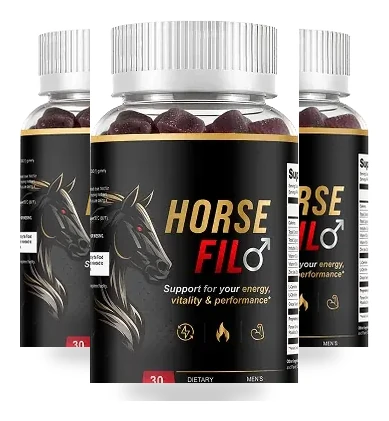
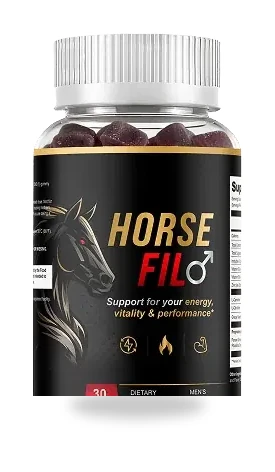
A large share of men searching for the best testosterone booster to buy online are chasing flat afternoons, thin endurance and a general sense of running at eighty per cent. HorseFil is the men's energy and vitality formula this site covers. It is not marketed as a hormone product and we are not going to dress it up as one, but if that was the shelf you meant, the official store lists current supply options and its own guarantee terms.
See It at the Official StoreAd · independent affiliate page · confirm every term on the store's own checkout
Proprietary blends: the trick that makes dose-matching impossible
A proprietary blend prints one combined weight for a group of ingredients. The order of the list still follows descending weight, which is the only clue you get, and it is a weak one. A blend listed at 750 mg containing six botanicals could be 700 mg of the cheapest one and a rounding error of the other five.
Manufacturers defend the practice as recipe protection. That argument would be more persuasive if the analytical labs any competitor can hire were not perfectly capable of reverse-engineering a formula from the finished product. The practical effect of a blend is not protection from competitors. It is protection from you.
The rule is simple and worth holding firmly: if the amount is hidden, treat the ingredient as absent. That is not cynicism, it is the only assumption the label supports. Formulators who have invested in real amounts almost always say so, because the panel is their best sales argument.
Standardisation: milligrams without a marker are decoration
For a mineral, milligrams are close to the whole story. For a plant, they are the beginning of one. Botanical potency depends on which part was harvested, when it was harvested, how it was dried, which solvent pulled the compounds out, and how concentrated the resulting extract is. Two products listing the same weight of the same plant can differ enormously in what they actually deliver.
Standardisation is the industry's answer. It guarantees a percentage of a marker compound — the ginsenosides, the rosavins, the withanolides — so that a milligram figure becomes comparable across brands. It is not perfect, because a marker is a proxy rather than the full activity of a plant, but it is the only common language available to a buyer holding two boxes.
Watch the ratio notation as well. A label reading 10:1 extract means ten parts raw material produced one part extract, so 200 mg of that extract represents more plant than 200 mg of ground root. A label giving neither a ratio nor a marker percentage is telling you it does not want to be compared.
Treat every hidden number as a zero. A manufacturer that has paid for real amounts of expensive ingredients will always tell you what they are, because that panel is the strongest argument the product has.
What dose-matching cannot do
This is the honest limits section, because the discipline above can create a false sense of certainty in exactly the men most likely to apply it.
A correctly matched dose only means the bottle contains what the studies used. It does not mean the studies were good. Much of the research in this aisle is small, short, funded by the ingredient supplier, and reported on surrogate markers rather than on anything a man would notice. Matching a dose to a weak study buys you a well-dosed version of a weak effect.
Dose-matching also cannot address bioavailability, the other half of the equation. Two identical amounts absorb differently depending on the salt form, the presence of food and the rest of the formula. Nor does it tell you anything about batch quality, which is a question about testing and manufacturing rather than about the recipe.
Most importantly, no dietary supplement diagnoses, treats, cures or prevents any condition, and none is a substitute for medical assessment. Genuinely low testosterone is a clinical diagnosis made with blood tests, usually taken in the morning and repeated, and it is managed by a doctor. If that is what you suspect, an over-the-counter product is the wrong aisle entirely, and the men's health pages at Mayo Clinic and Harvard Health linked below are a better starting point than any sales page including this one. The realistic ceiling for a well-dosed supplement is support for energy, stamina and general wellbeing alongside sleep, training, body composition and alcohol intake — all of which move the needle harder than any capsule.
Where HorseFil sits in this framework
HorseFil names six ingredients: L-citrulline, L-carnitine, panax ginseng extract, maca root extract, rhodiola extract and grape seed extract. That list is coherent for a men's energy and stamina formula — circulation, cellular energy, adaptogens — and it is not a hormonal stack. We would rather say that plainly than let the aisle it sits in imply otherwise.
Applying our own test to it produces an honest and slightly unsatisfying answer: the manufacturer publishes no per-ingredient amounts and no standardisation figures on its sales page, so steps four and five above cannot be completed from the website. They can only be completed from the physical Supplement Facts panel on a delivered bottle. We are not going to fill that gap with a number we invented, and any page that does has told you something about itself.
If you want the food-first version of this question before you buy anything at all, we work through it in what the research says about testosterone booster foods. And if you take an anticoagulant such as warfarin, or manage blood glucose, the ginseng line is the one to raise with a pharmacist before ordering anything from anyone.
Check the Official Store See current supply options
Frequently asked questions
How do I check whether a testosterone booster is properly dosed?
Read the Supplement Facts panel, note the serving size, and compare the per-serving amount of each active ingredient against the amount used in published human trials of that same ingredient in that same form. If the label shows less, hides the amount inside a proprietary blend, or names no standardisation marker for a botanical extract, the research being implied does not transfer to that bottle.
Does a bigger milligram number mean a better product?
No. A large number attached to an unstandardised root powder can carry less active material than a smaller number attached to a standardised extract. Milligrams describe weight, not activity, so the marker compound and the extract ratio matter more than the headline figure on the front of the box.
Why do so many formulas use a proprietary blend?
A proprietary blend lets a manufacturer print one combined weight for several ingredients, which protects the recipe and also hides how little of the expensive ingredients are present. It is legal, it is common, and it makes dose-matching impossible, which is reason enough for a careful buyer to move on.
How long should I give a properly dosed formula before judging it?
Most trials in this category run for eight to twelve weeks, so a shorter personal trial cannot tell you much. Take it consistently, write down two or three things you care about each week, and judge the average of the last two weeks against the average of the two weeks before you started.
Where to check this yourself
- NIH Office of Dietary Supplements — zinc fact sheet for health professionals
- NIH Office of Dietary Supplements — vitamin D fact sheet
- National Center for Complementary and Integrative Health — ashwagandha
- Mayo Clinic — testosterone and ageing, and when a clinician gets involved
- PubMed — published randomised work on botanicals used in men's formulas
These are standing reference resources rather than citations of individual trials. We point you at the bodies that maintain the evidence summaries so you can check the current position yourself, rather than at a snapshot that ages.