Blood Sugar Dietary Supplement Trials: How to Read One
Every sales page cites research. Almost none of it says what the page implies. Here is the short course in reading a trial well enough to tell a real signal from a decorative citation — in about the time it takes to finish a coffee.
Quick answer: what makes a supplement trial worth believing?
A blood sugar dietary supplement trial is worth taking seriously when it is randomised, placebo-controlled, blinded to both participants and investigators, registered before it started, and long enough to move a meaningful endpoint such as HbA1c — which means at least twelve weeks. Everything below that standard is a hypothesis, and a citation attached to a sales page is usually a study of one isolated ingredient at a dose that may have no relationship to what is in the bottle.
- Design first, result second. Read the methods before the abstract's conclusion. An impressive finding from a weak design is not a finding.
- Match the dose and the form. If the trial used a gram of a standardised extract and the product contains an undisclosed fraction of that, the citation does not transfer.
- Match the population. A result in people with a diagnosed condition does not predict anything for someone whose numbers are already normal.
The citation is now standard furniture on supplement pages. A superscript number, a journal name in small type, an implication of rigour. The uncomfortable truth is that most buyers — sensibly — never click through, and the pages know it. So this article is about the handful of structural questions that let you assess a claim without becoming a statistician, and about the specific ways a genuine study can be attached to a product it does not support.
Where most blood sugar dietary supplement citations actually sit
Not all research answers the same question. The ladder runs roughly like this.
Test-tube work shows that a compound does something to cells in a dish, often at concentrations no human could achieve by swallowing it. Animal work shows an effect in a rodent, whose metabolism is not yours, usually at doses that would be extraordinary scaled up. Open-label human work gives everybody the product and asks how they felt, which measures expectation as much as chemistry. Randomised, placebo-controlled, double-blind trials are the first rung where a causal claim becomes reasonable. Pooled analyses of several such trials are the strongest ordinary evidence available, provided the trials being pooled were decent to begin with.
Most citations decorating a blood sugar dietary supplement page sit on the first three rungs. That is not fraud; test-tube and animal work is legitimate science and it is how ingredients get discovered. It simply cannot support a sentence about what will happen to a person who buys a bottle.
| Study type | What it can legitimately show | What it cannot show | Weight in a buying decision |
|---|---|---|---|
| Cell or test-tube study | A plausible mechanism exists | Anything about a person swallowing the ingredient | Effectively none |
| Animal study | The mechanism survives in a living system | Human dose, human metabolism, human relevance | Very little |
| Open-label human study | The product was tolerated; a hypothesis is worth testing properly | Whether the effect was the product or the expectation | Low |
| Small randomised controlled trial | A signal, in a defined population, at a defined dose | Reliable effect size; generalisation beyond that population | Moderate, with caution |
| Large randomised controlled trial, twelve weeks or more | A credible causal estimate on a real endpoint | That the same holds for a different formulation or dose | High |
| Pooled analysis of several trials | Consistency, or the absence of it, across studies | More quality than the underlying trials possessed | Highest available, and it often reports disagreement |
Five design features that decide whether a result means anything
Randomisation. Participants assigned by chance rather than by choice or by an investigator's judgement. Without it, the groups differ at the start and the result is describing that difference.
A placebo control. The comparison group takes something indistinguishable. Glucose measurements taken in people who know they are being helped are not comparable to measurements taken in people who do not.
Double blinding. Neither participants nor the people assessing outcomes know who received what. Unblinded outcome assessment is one of the most reliable ways to manufacture a positive result without intending to.
Prospective registration. The trial was listed publicly, with its primary endpoint declared, before recruitment. This is the single most useful thing to check, because it prevents the endpoint being chosen after the data arrives.
Adequate duration. HbA1c reflects roughly two to three months of glucose exposure. A four-week trial reporting a change in it has reported an artefact of the measurement's own lag, not a change in the participants.
The most common flaw in this literature is not dishonesty. It is a trial that was too small, too short and too loosely controlled to detect anything, publishing a secondary endpoint that happened to reach significance.

Reading trials because your energy dropped, not your panel?
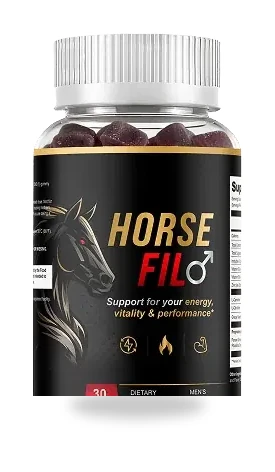
A fair number of men working through the top blood sugar support supplements arrived from an energy complaint rather than a laboratory result. HorseFil is the men's energy and vitality formula this site covers. It is not a glucose product and we will not present it as one — but if that is what you were actually looking for, the official store lists its current price and its own guarantee terms.
See It at the Official StoreAd · independent affiliate page · confirm every price and term on the store's own checkout
Endpoints: the difference between statistically significant and worth anything
A trial declares a primary endpoint in advance — the one question it was designed and powered to answer. Everything else is secondary and exploratory. Measure enough secondary endpoints and something will cross the significance threshold by chance alone; that is arithmetic, not discovery. When a page cites a finding, check whether it was the primary endpoint. If the abstract leads with a secondary outcome, the primary one probably did not cooperate.
Then separate two ideas that sound identical. Statistical significance says a difference is unlikely to be pure chance. Clinical meaningfulness says the difference is large enough to matter to a human being. A large trial can produce a highly significant change so small that no clinician would alter anything on the basis of it. Sales pages quote the first and imply the second, routinely.
Finally, watch for surrogate endpoints — a marker standing in for an outcome people care about. Surrogates are practical and often reasonable, but a change in a marker is a promissory note, not a delivered benefit.
Population matching: was the trial about anyone like you?
This is where most citations quietly fail. A study conducted in adults with a diagnosed metabolic condition, on medication, under supervision, tells you something about that group. It does not predict what happens in a healthy forty-year-old whose numbers are already normal — and in general, the more room there is to move, the larger an apparent effect will look.
Check four things in the methods: baseline values, age range, sex distribution and medication status. If a product is marketed to men and the trial ran in postmenopausal women, that is worth knowing. If the participants started at values far from yours, the reported change is not portable to you.
Sample size deserves one blunt sentence: a trial with a few dozen participants can generate a headline but cannot produce a reliable estimate of how big an effect is. Small trials do not merely have wide error bars. When they do report a positive result, that result is systematically more likely to be an overestimate.
Dose, form and the gap between a trial and a bottle
Suppose the trial is well designed, adequately sized and genuinely positive. There is still one step left, and it is the step that disqualifies most product citations.
Was the tested substance the same substance? Botanicals vary by species, plant part, extraction solvent and standardisation marker. Ginseng standardised to a stated ginsenoside percentage is not interchangeable with unstandardised ginseng powder, and a trial of one says nothing dependable about the other. Then: was the amount the same? If a trial used grams per day and the label discloses milligrams — or, worse, hides the amount inside a proprietary blend — the citation cannot transfer. And finally: was it tested alone or in a blend? Ingredients in combination can interfere with each other's absorption, and testing five things separately is not testing them together.
Any product that cannot answer those three questions from its own label has cited research it is not entitled to, however real that research is. Working out whether the label can answer them at all is the companion skill, and we set it out in the buyer's guide to third-party testing and label literacy.

Funding, registration and the studies you never see
Industry funding does not invalidate a trial, and pretending otherwise would be lazy. Much good nutrition research is funded by people with an interest in the answer, because nobody else pays for it. What funding does is raise the value of the structural checks: registration, a declared primary endpoint, independent statistical handling, and full publication regardless of outcome.
Publication bias is the harder problem. Trials with disappointing results are less likely to be written up and less likely to be published, so the visible literature on any popular ingredient is skewed positive before anyone reads a word of it. This is precisely why a pooled analysis that reports inconsistency across trials is more informative than a single glowing study — and why "there are studies showing" is a phrase that should raise your guard rather than lower it. There are studies showing almost anything.
What even a perfect trial cannot tell you
Three limits worth stating plainly, because trial literacy can curdle into false confidence.
A trial reports an average. You are not an average, and individual response varies for reasons the trial was not designed to explain. A positive result means the mean moved, not that it will move in you.
A trial of an ingredient is not a trial of a product. Unless the finished formulation was tested as sold, at the amounts sold, no citation describes the thing in your hand.
And no trial in this category changes the legal and biological reality: a dietary supplement is not a treatment. Nothing here diagnoses, treats, cures or prevents diabetes or any other disease, nothing replaces prescribed medication or monitoring, and the honest ceiling for the whole aisle is supporting a process already within a normal range while diet, movement, sleep and body composition do the heavy lifting. Anyone claiming to sell the best supplement for blood sugar control is describing a marketing position, not a trial result.
Where the product this site covers fits
HorseFil is a men's energy and vitality formula rather than a glucose product, and it makes no glucose claim. It is relevant to this page for one reason worth repeating: it contains panax ginseng, which has documented effects on blood glucose and documented interactions with diabetes medication and with anticoagulants such as warfarin.
Apply this article's own standard to it and the result is uncomfortable but honest: the sales page publishes no per-ingredient amounts and no standardisation figures, so no published trial can be mapped onto it from the website. That assessment can only be completed from the physical Supplement Facts panel on a delivered bottle. We hold the product we cover to the same test as everything else on the shelf, and we say so when it cannot be completed.
Check the Official Store See the ingredient questions
Frequently asked questions
What makes a blood sugar dietary supplement trial credible?
Randomisation, a placebo control, blinding of both participants and outcome assessors, public registration before recruitment with a declared primary endpoint, and a duration of at least twelve weeks so that a marker such as HbA1c has time to reflect any real change.
Why does a positive study not prove a product works?
Because trials study ingredients, not products. If a study used a standardised extract at a gram-scale daily dose and the bottle contains an undisclosed fraction of that inside a proprietary blend, the finding does not transfer to the product on the shelf.
What is the difference between statistical significance and a meaningful result?
Statistical significance says a difference is unlikely to be chance alone. Clinical meaningfulness says the difference is large enough to matter to a person. A large trial can produce a highly significant change that is far too small for any clinician to act on, and sales pages routinely quote the first while implying the second.
Should industry funding make me discard a trial?
No, but it raises the value of the structural checks. Look for prospective registration, a declared primary endpoint, independent statistical handling and publication regardless of the outcome. Publication bias matters more than funding, because disappointing trials are less likely to be written up at all.
Where to check this yourself
- PubMed — randomised placebo-controlled trials of glycaemic supplements
- U.S. National Library of Medicine — how randomised controlled trials work
- NCCIH — finding and evaluating health research
- Harvard Health — on evaluating supplement claims
- Mayo Clinic — how clinical trials are designed and phased
These are standing reference resources rather than citations of individual trials. We point you at the bodies that maintain the evidence summaries so you can check the current position yourself, rather than at a snapshot that ages.