Best Testosterone Booster 2026: A Buyer's Guide That Reads Labels, Not Adverts
Almost every product in this aisle promises the same thing. The shortlist that survives a hard look at the evidence is far shorter than the shelf, and it is built from milligrams you can verify rather than hype you cannot.

Quick answer: how to pick the best testosterone booster in 2026
The best testosterone booster in 2026 is chosen by its label, not its landing page. Favour formulas that disclose every milligram, use clinically studied ingredients at studied doses — Tongkat Ali 200–400mg, ashwagandha 300–600mg, vitamin D 3000–5000 IU, zinc 30mg — and carry third-party or GMP testing you can actually check. Treat any product that hides amounts inside a proprietary blend, or promises a guaranteed number, as a marketing exercise rather than a supplement.
- Dose beats name. An ingredient without a milligram figure next to it cannot be judged, and usually cannot be trusted.
- Evidence beats hype. A USC Keck review found ~90% of boosters claim to raise testosterone while under 25% had supporting data.
- Transparency beats a proprietary blend. Blends exist to hide underdosing, not to protect a recipe.
Type "best testosterone booster" into any search bar in 2026 and you will meet a wall of confidence: dozens of products, each certain it is the one, each garlanded with stars and stock photography of men lifting improbable weights. The confidence is the problem. When every bottle claims the same result, the claim carries no information, and the buyer is left choosing on packaging design. This guide throws that method out and replaces it with four questions any honest formula can answer and most cannot.
What actually makes the best testosterone booster in 2026
Strip away the branding and a genuinely good product in this category is defined by four things, in order of importance. Get these right and you have filtered out perhaps nine tenths of the shelf before you have read a single review.
Clinically relevant doses. An ingredient only does whatever it does at the amount that was studied. Half that amount is not half the benefit; it is frequently no benefit at all, because many effects have a threshold. The best products print a dose beside every active ingredient, and those doses land inside the ranges the research actually used.
Full-label transparency. If a formula lists a "proprietary blend — 1,200mg" and then names eight ingredients underneath without splitting that total, you have no idea whether the useful component is present at 400mg or at four. That ambiguity is the point of the blend, and it is disqualifying.
Independent quality testing. Third-party testing and manufacture in a GMP-certified facility do not prove an ingredient works, but they do tell you the powder in the capsule is what the label says and is not contaminated. We walk through what those marks mean, and what they do not, in the basics of third-party testing and GMP certification for men's supplements.
Honest marketing. The moment a product guarantees a percentage rise in testosterone, or shows a chart with no study behind it, it has told you how it does business. Restraint in the copy is a quiet signal of confidence in the formula.
The uncomfortable statistic every buyer should know first
Before shortlisting anything, sit with one finding. A review from the USC Keck School of Medicine examined the marketing and the evidence behind over-the-counter testosterone products and reported that roughly 90 percent of them claimed to boost testosterone, while fewer than a quarter had any published data to support that claim. Fewer still had data showing the finished product, at its actual dose, did anything in men.
That single ratio reframes the whole search. You are not wading through a field of mostly-good products looking for the best one. You are wading through a field that is mostly evidence-free, looking for the minority that is not. It also explains the pattern of disappointment: most men who try a booster and feel nothing were not unlucky, they simply bought from the 90 percent. The task is to land in the 10.

The four ingredients with the strongest human case
If you want a shortlist of what a top booster should actually contain, four names carry most of the defensible evidence. Each comes with a dose, and the dose is not optional.
Tongkat Ali, 200–400mg of a standardised extract. This is the most-studied natural ingredient in the category, with several randomised trials and a 2022 meta-analysis behind it. The evidence is strongest in men who started low, and the effect is real but measured. We go deeper into the trials and dosing in our full look at the human evidence and correct dose for Tongkat Ali.
Ashwagandha, 300–600mg of a standardised root extract. Best evidenced for stress and, indirectly, for the hormonal knock-on effects of lowered stress. A reasonable inclusion at a real dose; a decorative one below it.
Vitamin D, 3000–5000 IU, where status is low. The hormone data is mixed, but correcting a genuine deficiency is worthwhile on its own terms and low vitamin D is common. This is correction, not elevation.
Zinc, around 30mg, where intake is low. Genuinely required for normal reproductive function, with measurable consequences when deficient and little to add when you already eat plenty. Very high chronic intakes interfere with copper, so more is not better.
| Ingredient | Studied dose | What the human evidence supports | Strength |
|---|---|---|---|
| Tongkat Ali (standardised) | 200–400mg/day | Modest testosterone increases, strongest in men starting low | Moderate, several RCTs plus a meta-analysis |
| Ashwagandha (root extract) | 300–600mg/day | Stress reduction, with indirect hormonal knock-on effects | Moderate for stress, weaker for hormones directly |
| Vitamin D | 3000–5000 IU/day | Corrects low status; hormone findings mixed | Mixed, conditional on deficiency |
| Zinc | ~30mg/day | Supports normal function where intake is low | Moderate, conditional on shortfall |
| Tribulus terrestris | varies | No reliable testosterone increase in men | Weak; a 2014 review found no effect |
| "Proprietary blend" | undisclosed | Unjudgeable by design | Avoid |
Where the label-first standard lands
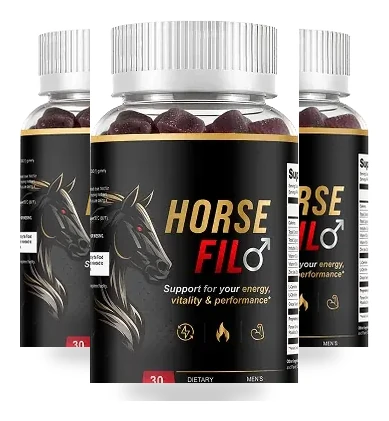
If you apply the four tests above and want to see one formula that publishes its ingredients openly, HorseFil is the men's energy and vitality formula this site covers. We will be plain about what it is: an adaptogen and circulation formula built around L-citrulline, L-carnitine, panax ginseng, maca root and rhodiola — a stamina and vitality product rather than a hormonal one. If that is the shelf you actually meant, the official store lists current supply options and its own guarantee terms.
See It at the Official StoreAd · independent affiliate page · confirm every term on the store's own checkout
Red flags: proprietary blends, tribulus and the pixie-dust problem
Knowing what to avoid is half the shortlist. Three red flags recur so often they function as a filter on their own.
The proprietary blend. A blend is a legal way to list ingredients without listing amounts. There is no manufacturing reason a men's supplement needs one, and the practical effect is that a formula can sprinkle a trace of an expensive extract on top of cheap fillers and still list it proudly. This is the pixie-dust problem: the ingredient is present, technically, at a dose that does nothing. If you cannot see the milligrams, assume the worst, because the honest players show them.
Tribulus terrestris headlined as a testosterone ingredient. Tribulus is one of the oldest names in the aisle and one of the weakest. A 2014 review of the human evidence found it did not raise testosterone in men, yet it persists on labels because it is cheap and because it sounds exotic. Its presence is not disqualifying on its own, but a formula that leads with tribulus is telling you where its priorities lie.
The guaranteed number. Any product promising a specific percentage rise is either ignoring the biology or inventing the data. Real effects vary by the man, his starting level and his lifestyle, and no ethical formula pretends otherwise.
The best testosterone booster is not the one with the boldest promise. It is the one whose label you could hand to a pharmacist without embarrassment.
What a quality booster should cost per month
Price is a signal, and it reads in both directions. Real standardised extracts — a genuine 100:1 Tongkat, a branded ashwagandha — cost real money, so a formula selling a month's supply for the price of a coffee is almost certainly underdosed or padded with fillers. A transparent, adequately dosed product tends to sit somewhere in the region of thirty to seventy dollars a month, with multi-bottle orders bringing the per-month figure down.
The mirror-image error is assuming expensive means better. Past a point, extra cost buys heavier bottles and glossier boxes, not stronger evidence. The right way to read price is against the disclosed milligrams: a product that costs more but discloses clinically relevant doses of studied ingredients is a better buy than a cheaper one hiding everything in a blend. We break the arithmetic down in our explainer on what a testosterone booster should cost per month.
Objections and myths worth answering before you buy
"If they all claim the same thing, aren't they all roughly equal?" No, and this is the central trap. Identical claims sit on top of wildly different formulas, because the claim is cheap and the evidence is not. Two products can promise the same result while one contains a studied dose and the other contains a rumour. The label is where they separate.
"Natural means it can't be strong enough to matter." This underrates plant chemistry and overrates the dividing line. The question is never natural versus synthetic; it is dosed versus decorative. A standardised botanical extract at a studied amount can have measurable effects, while a synthetic compound at a token dose does nothing. What "natural" should signal on a label, and how to read the tells, is the whole subject of our guide to what a natural testosterone booster really means.
"A booster is the same as testosterone replacement therapy." It is not, and conflating them causes real disappointment. TRT is a prescription that supplies the hormone directly, managed by a doctor from blood tests. A supplement, at best, supports the body's own production or corrects a nutrient gap, and the ceiling on that is low by comparison. If your level is clinically low, that is a medical conversation, and no bottle on any shelf is a substitute for it.
Where HorseFil fits in an evidence-first shortlist
Honesty requires that we place our own subject correctly. HorseFil names L-citrulline, L-carnitine, panax ginseng, maca root, rhodiola and grape seed extract, and read against the evidence in this guide the category is clear: these are circulation, cellular-energy and adaptogen ingredients, not hormonal ones. Citrulline works on the blood-flow pathway, carnitine on energy metabolism, ginseng, maca and rhodiola on the adaptogen and stamina side. It is a men's energy and vitality formula, and we would rather say so than let the aisle imply it is a hormone product.
So where does it earn a place on a label-first shortlist? On the process, not on a hormonal claim it does not make. It discloses its ingredients, it is manufactured in a GMP-certified facility, and its marketing does not promise a number. If what you are actually chasing is day-to-day energy and stamina rather than a blood-test figure, that is the shelf it belongs on — and that distinction, drawn plainly, is worth more than another product pretending to be something it is not. One practical caution worth repeating: panax ginseng has documented interactions with anticoagulants such as warfarin and can affect blood glucose, so anyone on prescription medication should ask a pharmacist before buying anything from anyone.
Check the Official Store See the full ingredient list
Frequently asked questions
What makes a testosterone booster the best in 2026?
The best testosterone booster in 2026 is defined by its label, not its advertising. That means clinically relevant doses of ingredients with human evidence, every milligram disclosed rather than hidden in a proprietary blend, third-party or GMP testing you can verify, and honest marketing that stops short of promising a specific number. A product that meets all four is rare, which is exactly why the category disappoints so many buyers.
Do any testosterone boosters actually raise testosterone?
A small minority do, and only in specific men. A USC Keck School of Medicine review found roughly 90 percent of over-the-counter boosters claim to raise testosterone while under 25 percent had any supporting data. Where an effect shows up, it is usually in men who started with a deficiency or a genuine nutrient shortfall, and the change is modest. A well-nourished man with a normal level should expect very little from any pill.
Which ingredients should a top booster contain?
The four with the most defensible human evidence are Tongkat Ali at 200 to 400mg of a standardised extract, ashwagandha at 300 to 600mg, vitamin D at 3000 to 5000 IU where status is low, and zinc at around 30mg where intake is low. Notice that all four have a dose attached. An ingredient named without a number, or buried inside a proprietary blend, cannot be judged and should not be trusted.
How much should a quality booster cost per month?
A transparent, adequately dosed formula typically lands somewhere in the region of 30 to 70 dollars a month, with multi-bottle orders lowering the per-month figure. Far cheaper usually signals underdosing, since real extracts cost real money. Far more expensive rarely buys better evidence, only better packaging. Judge the price against the disclosed milligrams, not against the marketing.
Where to check this yourself
- PubMed Central — published work on testosterone supplement marketing and evidence
- NIH Office of Dietary Supplements — zinc consumer fact sheet
- NIH Office of Dietary Supplements — vitamin D consumer fact sheet
- Harvard Health — men's health topic hub
- PubMed — the human evidence on tribulus terrestris and testosterone
These are standing reference resources rather than citations of individual trials. We point you at the bodies that maintain the evidence summaries so you can check the current position yourself, rather than at a snapshot that ages.