Horse Fil Gummies vs. Capsules vs. Powders: What You Gain and Give Up
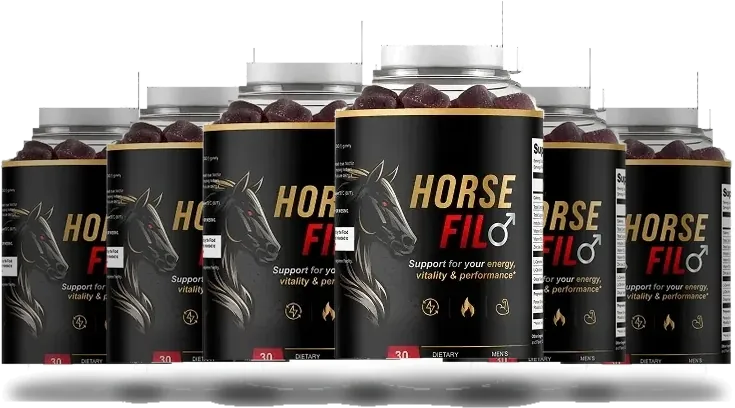
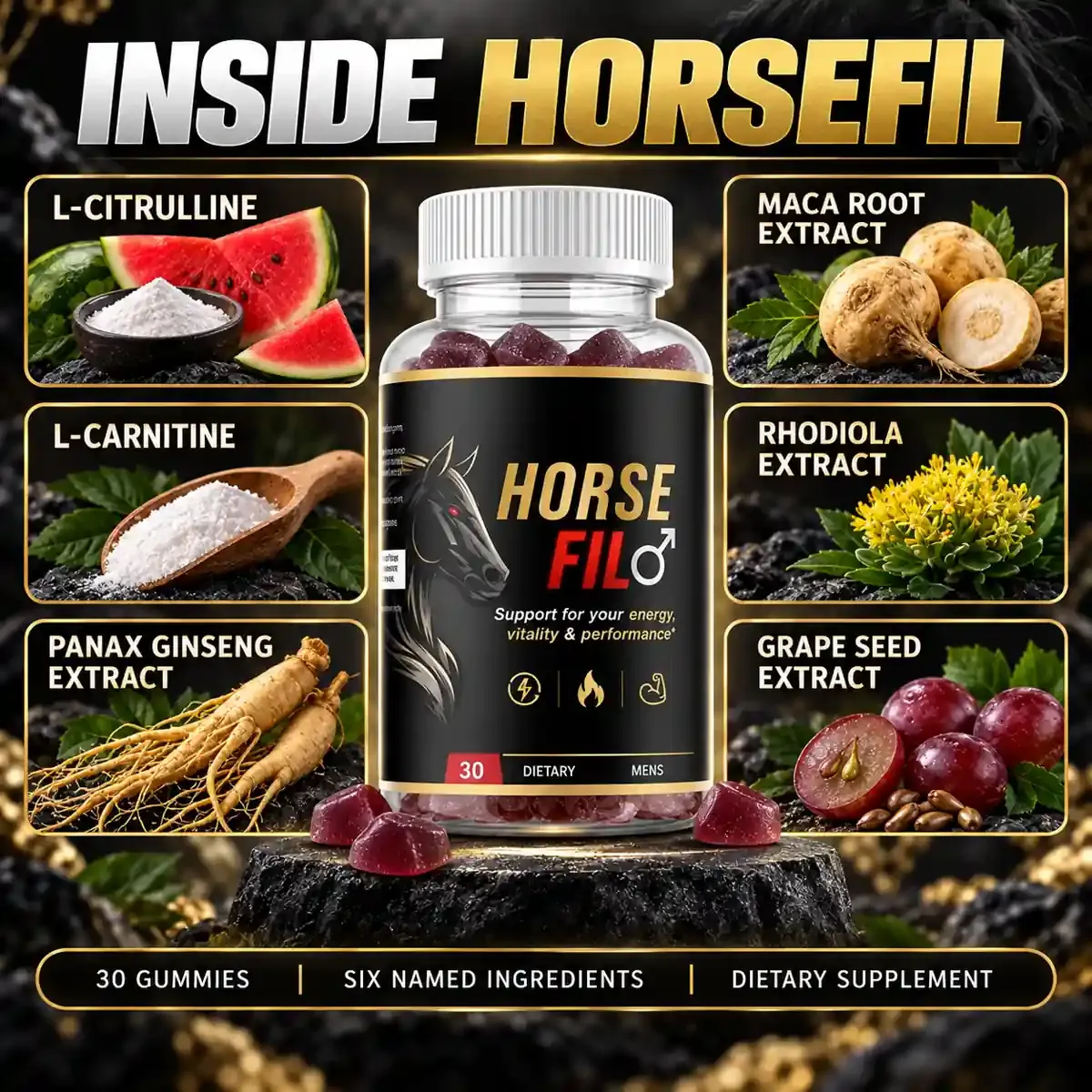
Horse Fil gummies are HorseFil chewable gummies: you take one a day with water, and each bottle holds 30. A gummy is the easiest format to take daily, but sugar and gelling agent fill most of its space, so it holds the least of a gram-level ingredient. Capsules sit in the middle, and powders carry the largest doses. HorseFil names six ingredients but does not publish their amounts, which shows the trade-off clearly.
Gummies vs. capsules vs. powders: the three formats, in short
Gummies, capsules and powders all deliver the same idea, active ingredients, in three very different packages. None of them is better in every way. Each one trades ease of use against how much of an ingredient it can actually hold, and against how easy it is to check the dose.
None of the three is a fixed rule, either. A well-made gummy can carry a meaningful amount of a low-dose herb, and a badly made capsule can be mostly filler. What actually varies between formats is the physical ceiling on how much active ingredient fits, and how easy that amount is to check on the label. That ceiling is the real story in this article.
| Format | How it is taken | Best at |
|---|---|---|
| Gummy | Chew 1-2 a day, no water needed | Convenience and taste |
| Capsule | Swallow 1-4 with water | Moderate doses, no taste |
| Powder | Mix a scoop into water or a drink | Gram-level, adjustable doses |
What you gain by choosing a gummy
No water, no aftertaste, no swallowing pills
This is the whole reason gummies exist as a category. A lot of adults dislike swallowing pills, and a chewable, flavored gummy removes that barrier completely. There is nothing to choke on, nothing to wash down, and the format is genuinely pleasant to use, which matters for a daily habit.
A built-in reminder
Because gummies taste like a treat, some people find them easier to remember than a capsule that looks like every other pill in the cabinet. A daily gummy can slot into a routine, next to breakfast or coffee, without feeling like medicine.
Portable and shelf-stable
A gummy travels well. No scoop, no water needed on the spot, no capsule to fumble out of a blister pack. For a bag or a desk drawer, that is a real convenience win over a powder tub.
Fewer decisions at the moment you take it
A gummy asks nothing of you beyond opening the bottle. No water glass, no capsule count to double-check, no scoop to level off. For a habit meant to run for months, removing friction at the exact moment you take it tends to matter more than people expect, and it is a big part of why gummy formats have grown across the whole supplement aisle, not just in men's vitality products.
What you give up on dose
The trade-off shows up the moment an ingredient needs a gram-level dose. A gummy has to stay chewable and pleasant to eat, so most of its weight is sugar, gelatin or pectin, water, color and flavor. Whatever active ingredient is left has to share the remaining space, and that space is small.
Compare that with a capsule, which can be packed almost entirely with active powder, or a drink mix, which can carry 5 to 10 grams in a single scoop without anyone noticing the volume. Several of the ingredients common in men's vitality products were studied at exactly that scale: L-citrulline research commonly used 1.5 to 8 grams a day, L-carnitine trials used 1 to 4 grams, and maca root trials used 1.5 to 3.5 grams (Malaguarnera et al., 2007; Shin et al., 2010). A single gummy, base included, is unlikely to hold any one of those amounts, let alone several at once.
Herbal extracts standardized to a smaller weight fare better. Rhodiola's main stress-fatigue trial used 576 milligrams a day (Olsson et al., 2009), and grape seed extract research for blood pressure commonly used 100 to 300 milligrams a day (Feringa et al., 2011). Those numbers are small enough that a gummy has a real shot at holding them.
| Ingredient | Research dose | Fits in one gummy? |
|---|---|---|
| L-citrulline | 1.5-8 g/day | Unlikely |
| L-carnitine | 1-4 g/day | Unlikely |
| Maca root | 1.5-3.5 g/day | Unlikely |
| Panax ginseng | roughly 0.6-3 g/day | Possible only near the low end |
| Rhodiola | 200-680 mg/day | Plausible |
| Grape seed extract | 100-300 mg/day | Plausible |
HorseFil as a worked example
HorseFil is a gummy that names all six of the ingredients in the table above, in a single daily gummy. That is a useful real-world example of the trade-off, because it shows the format problem clearly: six ingredients, two of which (L-citrulline and L-carnitine) are typically studied in grams, sharing space in one chewable gummy that also has to carry sugar and gelling agent.
HorseFil does not publish milligram amounts for any ingredient, so nobody outside the maker can say exactly how the six are split. What can be said is the structural point: rhodiola and grape seed extract, the two ingredients with the smallest research doses, are the best fit for a gummy format. L-citrulline and L-carnitine are the hardest fit, because their study doses run in grams. Our deeper look at that gap is in how much L-citrulline studies actually use, and the full ingredient-by-ingredient breakdown is on the HorseFil ingredients page.
How to choose between gummies, capsules and powders
Start with what you actually want from the ingredient, not the format. If you want a known, research-level dose of a specific amino acid like L-citrulline or L-carnitine, a single-ingredient powder is the most direct route: it is built to carry grams, and a reputable one will print the exact amount per scoop.
Want ease over precision
A gummy fits. Expect smaller, often unstated amounts of each ingredient, and judge it as a mild daily habit, not a lab-dose product.
Want a known dose, no water needed
Look for a capsule that lists milligrams per ingredient on the label. You will likely need 2-4 capsules to reach a research-level amount.
Want to match a specific study dose
A single-ingredient powder is built for this. It is the only format that comfortably reaches 3-8 grams of one ingredient.
Whatever you choose, check the label for actual milligram or gram amounts before assuming a name on the ingredient list means a meaningful dose. "Contains L-citrulline" and "500 mg of L-citrulline" are very different claims, and only one of them lets you compare to research.
It also helps to be honest about how long you plan to stick with something. A powder scoop mixed into water every morning is a bigger ask than a single gummy, and a supplement you quit after two weeks does nothing for you regardless of its dose. If the realistic outcome is that a gummy gets taken daily and a powder gets skipped after a week, the gummy is doing more work in practice, even holding less of any one ingredient.
Bottom line: which format should you pick?
Gummies win on ease. Capsules split the difference. Powders win on dose. None of the three formats changes what an ingredient does in the body, only how much of it you realistically get and how easy that amount is to verify.
- Pick the format that matches your real priority: ease, moderate dosing, or research-level amounts
- A gummy or capsule that hides its milligram amounts should be judged as a habit, not a dose
- Herbal extracts dosed in the hundreds of milligrams, like rhodiola, travel better in a gummy than gram-level aminos
- When precision matters, a disclosed powder or capsule beats an undisclosed gummy every time
Daily habits still matter more than any single format or ingredient. See our guide to energy habits after 40 for the routines that move the needle before any supplement does. Pack prices for HorseFil, if you want to see the gummy option in practice, are on the pricing page.
Questions readers ask
Are gummies as effective as capsules for supplements?
It depends on the ingredient and the dose. For ingredients studied at a few hundred milligrams, a gummy can carry a meaningful amount. For ingredients studied at several grams, a gummy is unlikely to reach a research-level dose.
Why do gummies have lower doses than capsules or powders?
A gummy must stay chewable and pleasant to eat, so sugar, gelatin or pectin, water, color and flavor take up most of its weight, leaving less room for active ingredients than a capsule or powder scoop.
Is it better to take supplements as a powder?
A powder is the best format when you want a specific gram-level dose, since it is built to carry 3 to 10 grams per serving and usually states the exact amount. It is less convenient than a gummy or capsule.
Does HorseFil publish how much of each ingredient is in a gummy?
No. HorseFil names six ingredients on its panel but does not publish milligram amounts for any of them, so shoppers cannot compare its gummy to research doses directly.
Which HorseFil ingredients are the best fit for a gummy?
Rhodiola and grape seed extract, since their research doses run in the hundreds of milligrams. L-citrulline and L-carnitine are the hardest fit, since studies on those typically use several grams a day.
How many capsules equal one gummy's convenience?
There is no fixed number; it depends on the product. Many capsule supplements ask for 2 to 4 capsules a day to reach a stated dose, versus one gummy, which is the convenience trade a gummy makes.
Keep reading
Energy Habits After 40
Sleep, training, food and stress do more for energy after 40 than any supplement. See where rhodiola and ginseng researc...
Read →L-Citrulline Dose Research
L-citrulline studies use 1.5 to 8 grams a day, not milligrams. See the real research doses, cited, and whether a gummy c...
Read →How much does HorseFil cost?
Pack sizes, days of supply and how to pick the right one.
Read →Order HorseFil from the official U.S. shop
30 gummies per bottle, one a day. Packs run from $158 for 2 bottles to $294 for 6 bottles, with free shipping and a 60-day money-back guarantee. Questions first? Call +1 (302) 200-3480.